
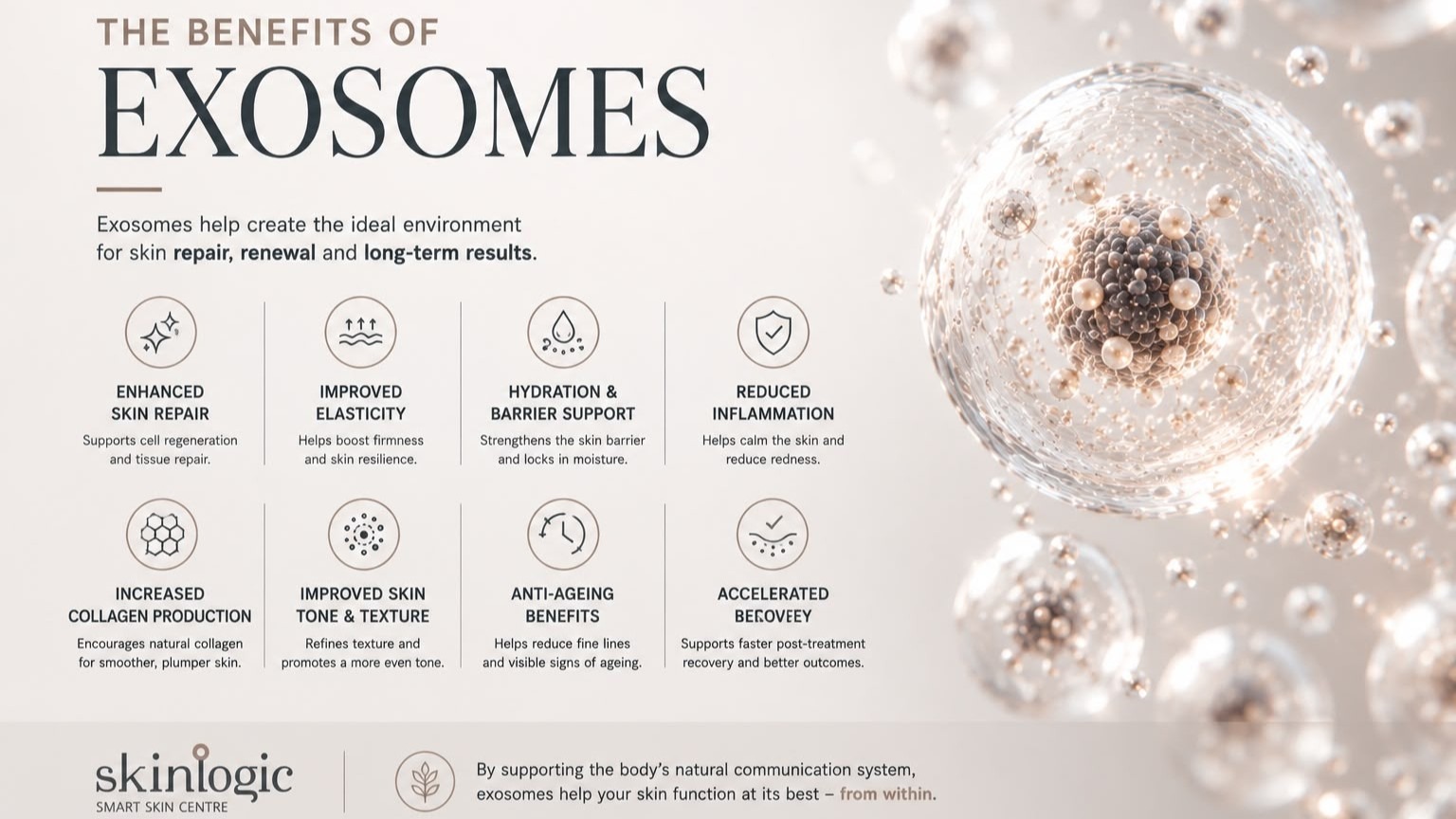
Harnessing your body’s own cellular messengers to support skin renewal, collagen production, and a healthier-looking complexion.
Stem cells, platelet-rich plasma (PRP), and exosomes have become increasingly prominent in the world of regenerative aesthetics. But what exactly are exosomes, and why are they attracting so much attention in skin rejuvenation?
At Skinlogic, we explore innovative approaches to skin health that work with the body’s natural regenerative processes. Autologous exosome therapy is one such treatment, offering an exciting approach to supporting skin quality, texture, and rejuvenation.
What are exosomes?
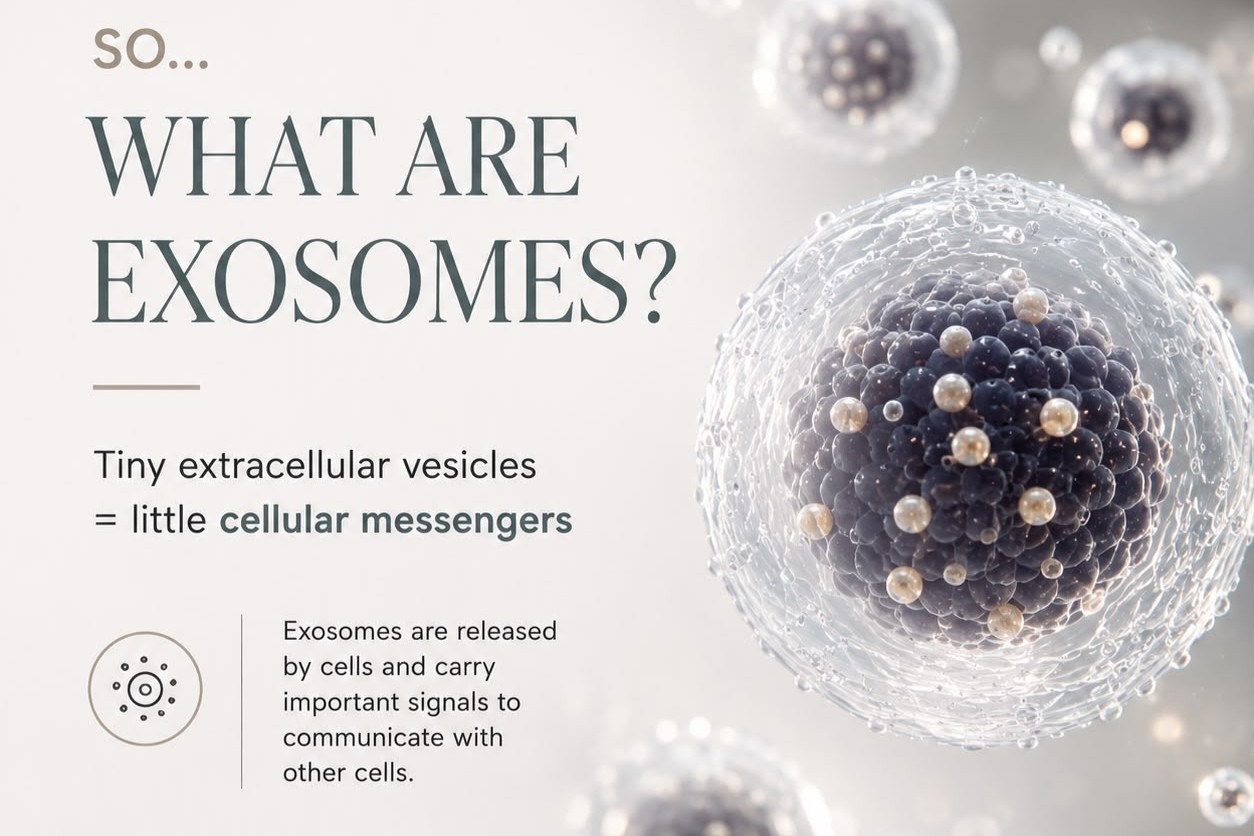
Exosomes are tiny extracellular vesicles released by cells. Think of them as microscopic messengers, carrying biological signals that help cells communicate with one another.
These vesicles contain a range of biological materials, including proteins, growth factors, and genetic signalling molecules such as messenger RNA (mRNA) and microRNA. When these signals reach other cells, they can influence cellular activity and the body’s response to its environment.
In the skin, exosome signalling is involved in several processes associated with tissue repair and regeneration, including:
- Fibroblast activity: Fibroblasts are the cells responsible for producing collagen and other components of the skin’s extracellular matrix.
- Collagen production: Signalling pathways may influence the production and remodelling of collagen, including types I and III, which contribute to the skin’s structure and support.
- Blood vessel formation: Certain biological signals may support angiogenesis, the formation of new blood vessels.
- Inflammation and healing: Exosomes may help regulate inflammatory responses and influence the skin’s natural repair processes.
These properties have made exosomes an area of considerable interest in regenerative medicine and aesthetic skin treatments. However, their effects depend on their source, composition, and method of application, and clinical research into their use in aesthetic medicine is still developing.
What makes autologous exosomes different?
The term autologous means that something comes from the same individual.
In autologous exosome therapy, the starting material is obtained from the patient’s own blood. This distinguishes the approach from treatments that use exosomes derived from other biological sources.
At Skinlogic, the treatment involves processing a blood sample to isolate and prepare the relevant biological material. The preparation is then used as part of a specialised skin-rejuvenation procedure.
The aim is to work with the body’s own biological signalling mechanisms to support skin regeneration.
How does autologous exosome treatment work at Skinlogic?
At Skinlogic, Dr Herman van Rooyen uses a specialised approach to the application of autologous exosomes.
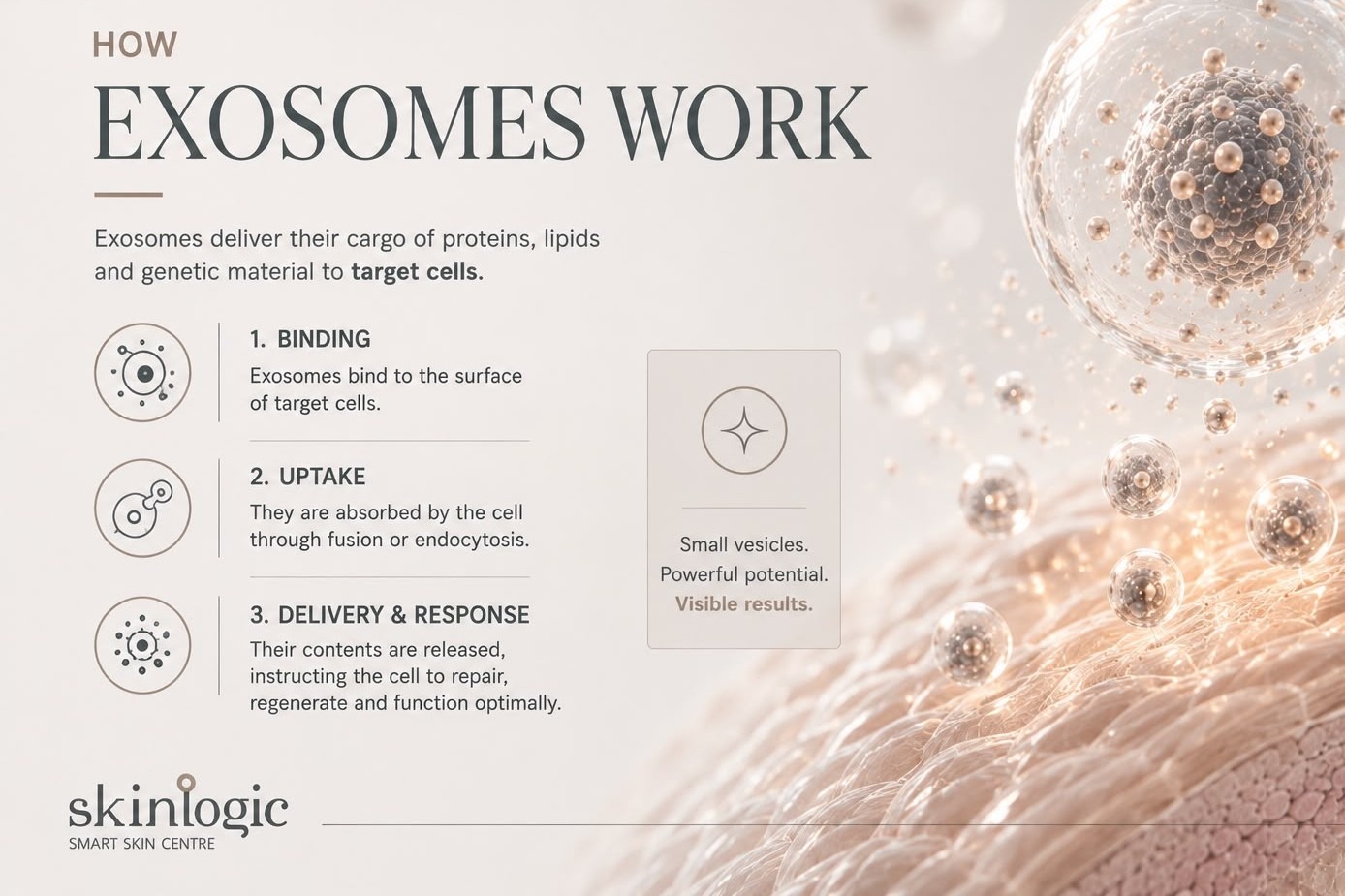
The procedure begins with the collection and processing of the patient’s blood. The sample is centrifuged to separate its components, after which the relevant material is isolated and processed using a specialised technique.
The resulting preparation is applied using a micro-kneading technique, designed to facilitate its application within the skin.
Depending on the patient’s skin and treatment goals, Dr van Rooyen may also incorporate a combination approach known as the sandwich technique.
This involves working at different depths within the skin:
Deep treatment: The autologous preparation is applied at a deeper level, with the aim of supporting the skin’s underlying regenerative processes.
Superficial treatment: A complementary serum may be applied closer to the skin’s surface to support improvements in skin texture and overall appearance.
By combining these approaches, the treatment is designed to address skin quality at different levels, supporting a more comprehensive rejuvenation outcome.
What are the potential benefits?
The appeal of regenerative skin treatments lies in their focus on the biological processes that contribute to skin health.
Autologous exosome therapy may offer potential benefits in areas such as:
- Improved skin texture and tone
- Support for collagen production and skin structure
- A smoother, more refreshed appearance
- Support for the skin’s natural repair processes
- A more comprehensive approach to skin rejuvenation when combined with other treatments
Individual results will vary, and the treatment’s suitability depends on each patient’s skin condition, medical history, and treatment objectives.
Is autologous exosome therapy right for you?
Regenerative skin treatments are not one-size-fits-all. While exosomes are an exciting area of research, the evidence supporting their use in aesthetic medicine is still evolving.
A consultation with Dr Herman van Rooyen at Skinlogic is the best way to determine whether autologous exosome treatment may be appropriate for your skin.
During your consultation, your skin concerns, treatment goals, and medical history can be assessed to establish a personalised treatment approach.
Interested in exploring regenerative skin rejuvenation?
Discover how Skinlogic approaches advanced skin treatments with a focus on individualised care.
Visit Skinlogic to learn more or arrange a consultation.mobility, holistic health and wellness.